Tuesday, 22 May 2012

Rock And Rea

I must confess to being a bit of a rock music fan and couldn't resist the opportunity to see Black Sabbath make a long awaited return to their hometown to play a warm up gig at the Birmingham O2 Academy on Saturday night in preparation for their slot at the Download Festival, a real treat for any Sabbath fan and for me a night of pure rock indulgence.


The planned fishing the following day ended up starting a little later than usual due mainly to my body requiring a little longer to recover from such events than it used to (and a few too many celebratory drinks!) but fish I did!...and when I arrived at the River Rea in Shropshire the river looked quite high and coloured but with about 12" of visibility in the water and fish rising I was soon tackling up and casting towards the rises.
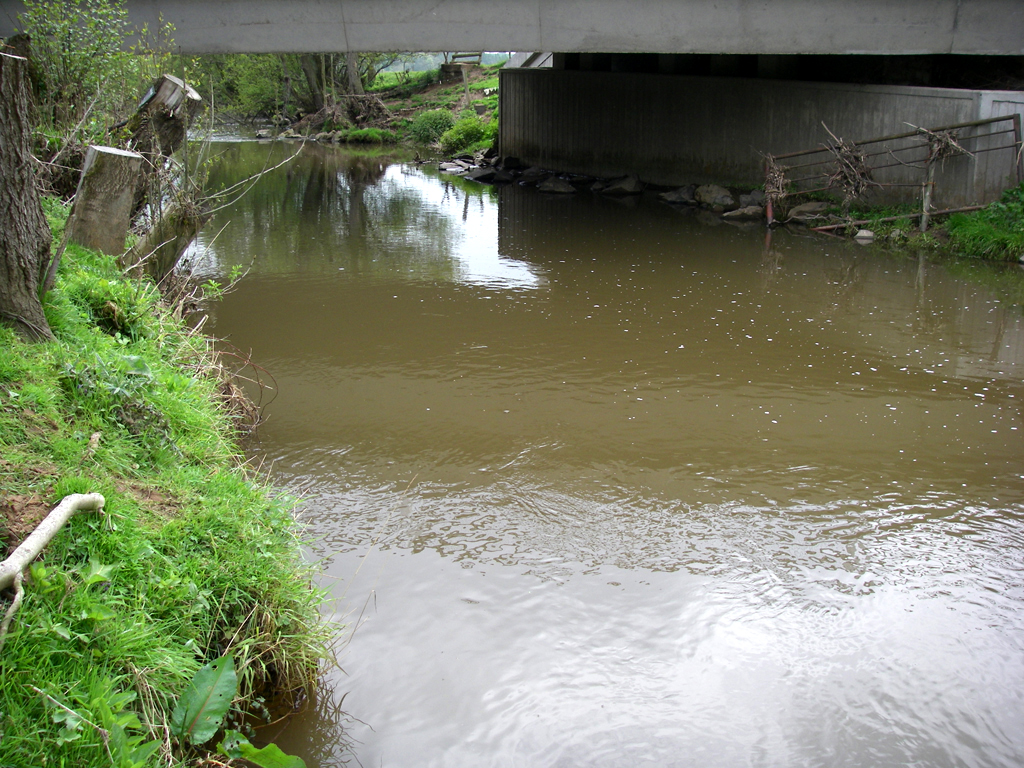
Quite high murky water to greet my arrival


It was soon apparent that the fish in this small river had lost some of the normal inhibitions they display when the water is lower and clearer and it was just a matter of working out the right dry pattern that would get the better results.

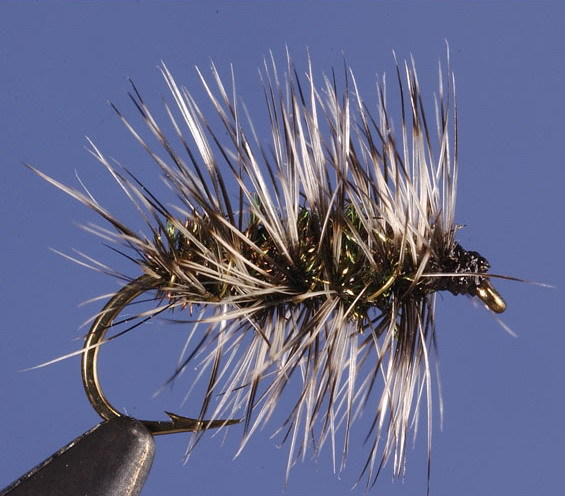
The Griffith's Gnat - a deadly pattern when there are small midges buzzing over the surface


Distinct white leading edge to anal fin

With masses of black gnats buzzing over the water the Griffith's Gnat proved very successful and as I slowly made my way upstream picking off rising fish and throwing prospective casts at likely looking spots I couldn't have wished for a more pleasant and relaxing way to spend an afternoon...and such a contrast to the previous nights events...they do say variety is the spice of life!

Tuesday, 24 April 2012

A Step In the Right Direction On The Monnow

I got the chance to visit the River Monnow again last weekend and started to get the feel of why this valley is so special to so many. I had only fished it previously during the winter months but on this visit things were definitely on the change.


Buds and leaves starting to appear on trees, flies hatching from the water surface with one or two trout taking advantage and sipping them off the top...and even the sun radiating some warmth on to my face when it occasionally peeped out from behind the clouds.

Another thing that stood out was the amount of habitat restoration work that had been carried out along the stretch I fished. There had been many bank side trees felled in a controlled way which allowed them to fall into the shallow river edges creating an instant sanctuary for the small vulnerable fish fry and even for the larger fish which may come under attack from the many piscivorous birds that are often found patrolling our inland waterways. The stems of the young trees are also only cut part way through so they are still allowed to continue to grow.

Young trees felled and left to grow along the river edges


This old dead branch cut and secured to the bank side which adds cover and diversity to the water flow
 This habitat work which is carried out by the 'Monnow Rivers Association' will reap rewards in securing healthy fish stocks for us all to enjoy in the future.

Water temperatures still seem to be a little on the cool side so I think it will be a couple of weeks before the trout really kick in, although fortunately there were still a few willing to fall for my duo tactics.


Monday, 16 April 2012

Upper Wye Near Rhayader

The course of the River Wye (Afon Gwy) takes on some beautiful scenery from its source on the Plynlimon mountain to some 215 kilometres where it enters the Severn Estuary, but the upper reaches are where you find it at its most dramatic.


There are many sections where it travels down steep gradients causes tumbling waterfalls and crashing white water as it flows rapidly over the large boulders and through bedrock gutters it has carved out over centuries of erosion.

A part of the Wye I sometimes fish below Rhayader runs through some quite rough terrain and creates some stunning scenery but as a consequence the wading is quite treacherous in parts and a wading staff is an essential part of your gear.


I also think these more dramatic stretches of water are where you can sometimes find better quality fish, I think the high oxygen levels combined with deep gutters for the fish to hide and of course a good food source all combine to produce an ideal habitat for the odd specimen fish.


Tuesday, 3 April 2012

Grannom Or Bust

Year after year the Grannom hatch never fails to frustrate me. The height of the hatch is a short lived affair which peaks normally around the beginning of April. The optimum time during the day seems to be between one o'clock and three o'clock and in that time there can be clouds of Grannom literally like a snowstorm one minute then a minute later they have all but disappeared.

The River Wye around Builth Wells

The Grannom sporadically hatching in 'clouds'

The Grannom Caddis Fly (Brachycentrus subnubilis)
The other problem is that when the trout get tuned on to them they become so preoccupied that nothing else will do and the difficulty then becomes working out at what stage the fish are taking them - ascending pupa, emerging caddis or adult. This can change instantly without any apparent reason why.
Last weekend on the River Wye there were times when the fish were very actively taking the flies either on the surface or just below, then without reason they would just stop feeding off the surface even though there were still many flies hatching.

This bruiser of a Chub gently sipped down my dry Grannom pattern and put a severe bend in my #3

I'm sure someone out there has a fly pattern that works very well during this hatch but I'm afraid it's one that isn't yet in my box. Sometimes I think I have it nailed and I will tie a fly that catches me a few fish then low and behold they decide it's no longer good enough and refuse it every time I put it over their head.

Although Grannom carry on hatching after this peak period I have found that the trout lose interest when they only emerge sparsely and quickly move on to something else. The reality is that unless you are able to fish the rivers daily it is hard to get out more than a couple of times during the peak period and therefore lessons are that much more difficult to learn.

Tuesday, 27 March 2012

Only Just Spring And Already Praying For Rain

A first trip out to one of my favourite Shropshire venues was a little bit of a shock last Sunday. This little river was running at a drastically low level and as a result the flows had become almost static in places that would normally have a good pull of water running through them.


It's no surprise that under such circumstances the chances of a good days fishing was virtually non existent and added the fact that the water had become crystal clear and there wasn't a cloud in the sky I would have chosen better to return back home and tie some flies for when things get better.

The only chance for any likely fish was going to be the deeper gullies that ran at the neck of a few of the pools and I did manage to connect with a couple of trout from one or two areas but it was one of those days when I soon realised that I was just going through the motions and as a result the enjoyment level had diminished rapidly.


We all long for a nice, warm days when we go out fishing and pray that the rain keeps off but I came away on Sunday hoping and praying that we have a prolonged spell of rain that will help turn this little river and many others in this region back to the healthy flows that help sustain the delicate balance these rivers depend on.

I'm hoping to be back on the Wye around Builth Wells next weekend in time for the prolific Grannom hatches that this river usually gets, but even this Welsh giant of a river is unseasonably low at the moment and will require early morning/late evening tactics to get the best out of it.


Recently Tied Grannom Emerger #14


Friday, 16 March 2012

New Season Aspirations

This winters Grayling fishing has been pretty kind to me with some superb days fishing mainly down to the warmer than usual temperatures. Last weekend on the River Ithon in Mid Wales wasn't exactly one of the better weekends but it did produce a couple of nice end of season Grayling and also my first 'official' brownie to kick off the new trout season.


Pair of Red Kites flying low over the River Ithon
My best from last weekend
So what's this new season going to offer? Well that's a question that non of us can answer with any degree of certainty, but on a personal level I have some definite targets set out for this year which include the following:

Firstly, I aim to visit some 'new' waters that I have not previously fished and have a list of some nice looking rivers and streams which hopefully will appear in this blog in due course.

Secondly, for me the ultimate pleasure from fly fishing is casting a dry fly upstream on a small stream in the middle of nowhere to a trout sipping flies off the surface undercover of some overhanging branches, then getting in the perfect cast and watching it take a recently tied pattern...glorious!!! But as this is a rare occurrence I intend to further explore other styles of fly fishing. One style that I am getting to grips with is the recent development of the 'European long rod/leader' approach to fishing which can really prove deadly in the right conditions.

Fishing the 'long leader' with my 10' #3 Greys Streamflex
Thirdly, Since starting fly tying some three years ago I cannot now imagine not tying my own flies anymore so this year I hope to further my tying abilities and share some of the patterns on this blog.

A major concern and one of the biggest problems likely to be encountered this year will be the lack of rain which is already causing rivers to run well below normal and with little foreseeable rain I can only imagine some areas of the UK will suffer even more so.

Wednesday, 22 February 2012

The Molten Mono Method

Whilst watching a recent Davie McPhail tying video I picked up what I thought was a great way to attach a bead to the top of the shank of a hook as in the style of a Polyfitus Nymph.

Polyfitus Peeping Caddis
The idea that Davie uses on one of his many outstanding YouTube videos is oulined below:

1. Double up a piece of strong breaking strain monofilament line (I've used 10lb line on a 4.5mm diameter tungsten bead) then thread it through the non-chamfered side of the bead.

2. Whilst holding the tag ends in your fingers get a lighter and proceed to slowly heat the ends.

3. Proceed to heat the mono so that it starts to melt in a ball towards the chamfered side of the bead.

4. When there is a large enough molten ball and when it has cooled down to a tacky state (this step comes easy with a little practice) use the back of your thumb nail and press the tacky ball of mono into the bead filling up the recess.                 

5. When the mono solidifies you end up with the bead firmly attached with a couple of tag ends ready to tie onto the top of the hook.

This method of attaching the tungsten bead on top of the hook naturally makes the fly sit in an upside down position on the river bed and allows the bend of the hook to face upward.